|


Home Grooming The Companion Old
English Sheepdog
Plucking Hair From The Ears
Of An Old English
Sheepdog
(A dog with much more ear hair.) |
|
|
 |
When
I was first told by by my vet that I needed to pluck an Old
English Sheepdog's ear hair, I know I made a face. "Oooh...
but it's going to hurt." He flipped up the ear flap on one of
the puppies we had recently purchased, pinched a couple of hairs
between his thumb and index finger and quickly plucked it out.
He put the ear flap back down. That particular dog never
flinched. That was my introduction to the process of plucking
ear hair.
Some dogs tolerate the process very well... others hate having it
done and may require sedation by a veterinarian so the hair can be
professionally removed.
This is why it's important to get the puppy or dog to view this
process as tolerable. The way I've desensitized my Old English
Sheepdog puppies to ear plucking is during their "introduction to
grooming". Even my Old English Sheepdog that arrived at close to 11
months of age went through this same process. It involves
brief play grooming sessions each evening. I think many dogs look
for, "What's in it for me?". All of my dogs are food motivated
so it makes things easier. Play grooming... treats... play
grooming.... treats... play grooming... treats... etc.
The first time I pluck a
dog's ears, I flip an ear flap (also known as the pinna), pinch
maybe 2-3 hairs and quickly remove it. I give the dog a treat
immediately after plucking the hair so he or she associates the
action with "something good is going to follow". We then go
back to play grooming. I go to the other ear a little later do
the same thing and that's it for the day. It doesn't appear
that much has been accomplished but if you play groom every evening,
it can add up over a month or two. I slowly add a couple more
hairs to each pluck as days goes by but only if the dog has been
tolerating it well.
|
I
have two dogs that don't particularly like the ear plucking process
but they do tolerate it. One is the dog that is shown in this
photo demonstration. The other 3 don't mind at all. For
the two that do care, I take it slower and start by removing only a
few hairs with each pluck.
|
While I do wipe down the
dog's ears after plucking, I do not fill the ear canal or
rinse out the dog's ears. I wait at least a couple of days
for the tissue to settle down because the regular cleaning solution
I use contains alcohol and would sting. Think about
plucking eye brows or shaving then swabbing with alcohol.
Ouch! I do use an alcohol-free solution to wipe the
outer area down with to remove ear wax and powder... excess powder
can also often be removed when the dog shakes off. I still
wipe the ears down after. |
|
Some people
prefer to use tools to remove ear hair... though I have a
couple of hemostats, I choose to use my fingers instead.
I don't have to worry accidently injuring the dog if he
suddenly moves. I surely don't have the most beautiful hands
but my short nails won't cause this dog any harm either.
You will need to be careful if you do have longer finger
nails.
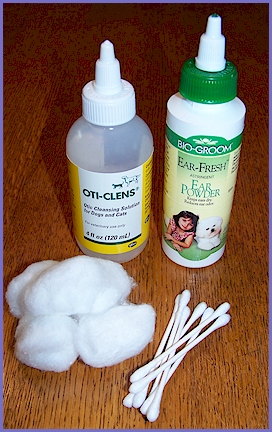
Ear care
products I used in this demonstration.
There are many others... use the ones you feel work best.
-
Bio-Groom
Ear-Fresh Astringent Ear Powder
Use: Ear powder allows you to get a better grip on the
hair your trying to remove.
-
Pfizer
Oti-Clens, Butler Euclens Otic Cleanser or any canine
ear cleaner that will not sting.
Use: To remove ear wax from the outer ear canal and ear
flap.
-
Cotton balls
and cotton swabs.
Use: To remove wax.
-
If your
dog is prone to ear infections,
speak with your vet about
the best products to use. Ask whether
applying an ear antibiotic immediately
after plucking might help to prevent ear infections due
to bacteria. These products usually requires a prescription.
Caution: One drug in particular that
I've used is said to cause hearing loss- Mometamax.
https://www.drugs.com/vet/mometamax-otic-suspension.html
https://deafdogsrock.com/be-aware-of-the-risks-when-treating-your-dog-with-mometamax
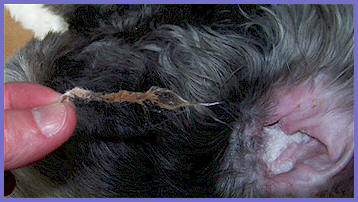
This clumped
together, waxy clump of hair was removed from deep in
the ear canal. Hair left in
the ears tends to collect wax and it can also limit air flow. |
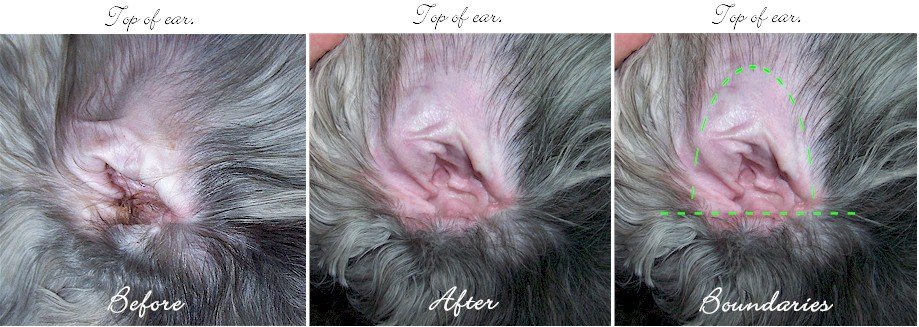
Below is an
example of an ear before being plucked and after. I
focus on the area inside the green dotted lines. Note
that I do not pluck the hair below the line at the
front of the ear opening. Instead, I use either
scissors or a palm clipper to trim it shorter.
I pluck hair by
pulling it out in the direction the hair is growing.
What You're
Trying To Accomplish... Before & After Pictures
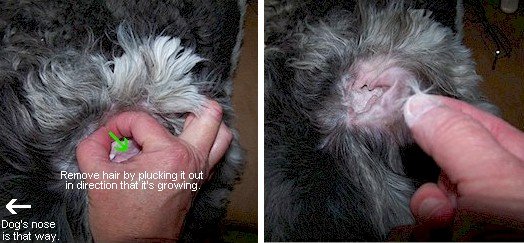
Remove the hair from your Old English
Sheepdog's ears
by plucking it out in the direction that it's growing.
Page 1
~
Page 2
~
Page 3
Copyright 2010- J.
Dunne. All rights reserved. The photographs and
instructions on this page are the property of the author. Do not
reproduce or copy for public use without written permission from the author.
|
|